
Topics

Results

Close the topic

Results

Momentum That Matters

A strong workforce, expanding businesses, and targeted sector growth position Greater Fargo–Moorhead for continued success.

While many metro areas across the country faced economic challenges over the past year, the Greater FM MSA has emerged as a success story.  Fueled by a strong job market, business expansions, and a thriving local economy, the region has demonstrated resilience and growth. From our trademark high labor participation rates and accompanying low unemployment to new investments in key industries, the region continues to set itself apart as a dynamic and prosperous metro.   

Guided by our annual work plan and supported by Innovate28, a four-year strategy with the FMWF Chamber to align business, workforce, and public policy programming, we work to proactively support three targeted sectors: AgTech, BioScience and Autonomous Systems as well as Advanced Manufacturing, Hardware/Software, and Distribution and Logistics.

In addition to supporting all existing primary-sector companies, we allocate additional time and resources to these sectors as they provide the greatest opportunity for our business recruitment efforts. 

Defining Success 

For any economic development organization, success is generally measured by job creation, capital investment and additional square footage added to a market. For the GFMEDC, we utilize a third-party applied economist to run an analysis that provides critical data to understand how primary-sector projects drive the region’s economic growth.  
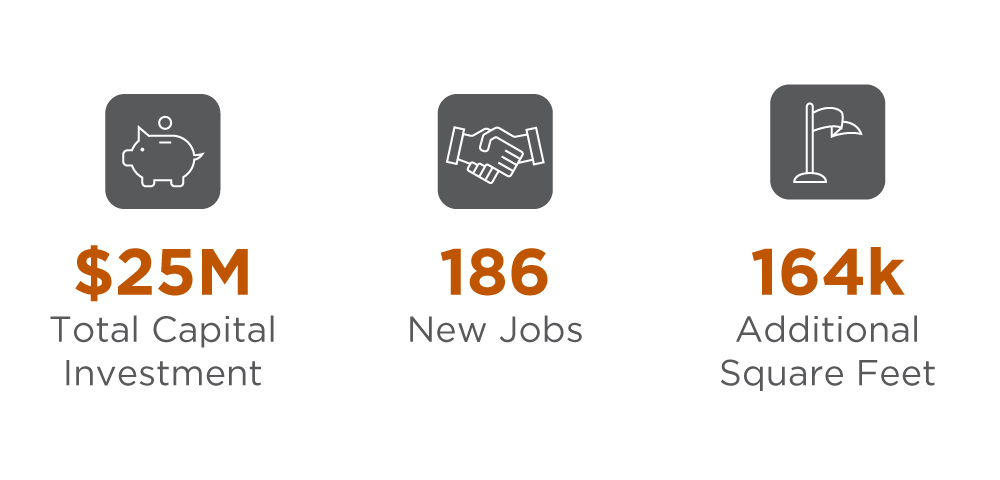
In 2025, the GFMEDC assisted 17 projects that created 304 new jobs. These companies injected more than $3 billion of new capital investments and utilized an additional 1,974,420 square feet of production space. 

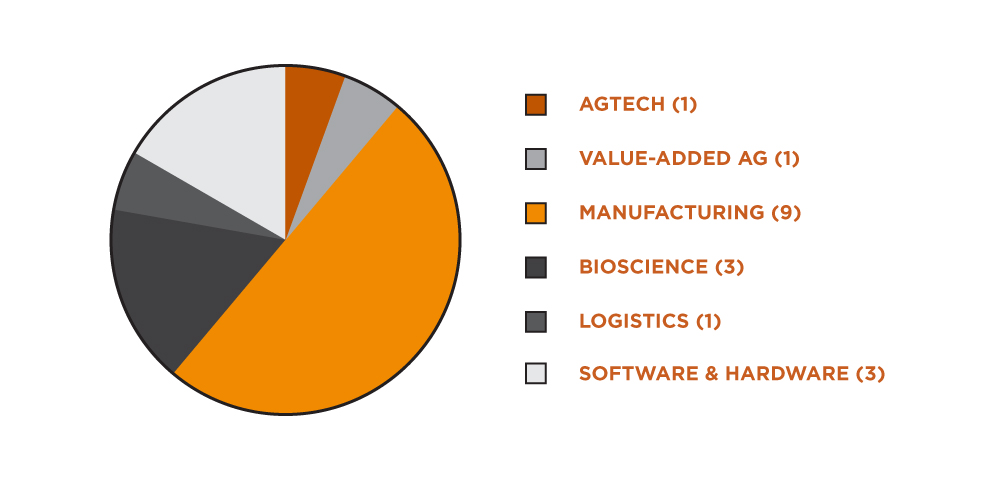
Breakdown of the 17 projects: 

Projects by Industry

Results that Matter  

Advancing Long-Term Regional Economic Growth 

The impact of the work we do, along with our partners, to support companies and the regional economy is not always immediate or linear. In fact, the most meaningful results are often the product of sustained engagement, consistent communication, and long-term support. Over time, these efforts translate into trusted relationships, new opportunities, and the growth and expansion that strengthens our regional economy. 

Looking Long-Term 

Approximately 70 percent of the GFMEDC’s historic economic development activity has been driven by expansions of existing companies. While this reflects the strength of local industry, the region also offers significant advantages that position it well for external investment, business expansions, and company relocations.  

Historically, however, the Fargo–Moorhead region has had limited brand recognition among national and international audiences, presenting a challenge to attracting new opportunities. 

To address this, the GFMEDC completed a strategic planning process in 2022 that committed the organization to a more proactive approach to business attraction. The strategy focuses on three targeted industries: 

  • AgTech 
  • Bioscience and Medical Devices 
  • Autonomous Systems and UAS  

The three targeted sectors were chosen based on their alignment with regional economic goals, competitive advantages, and workforce capabilities. This targeted approach is designed to support long-term growth, diversify the regional economy, and create high-quality employment opportunities. 

Business recruitment is not solely about attracting companies to relocate. It is about building the relationships and ecosystems that support long-term success. Strong ecosystems increase the likelihood that companies will continue to invest, expand, and establish lasting roots in the region. 

Prior to the implementation of this targeted recruitment strategy, the GFMEDC completed 78 projects between 2019 and 2021. During that period, 15 percent of projects were related to attraction and recruitment, 10 percent were entrepreneurial, and 75 percent resulted from existing company expansions. 

From 2022 through 2025, the impact of the targeted approach became evident. Of the 82 projects completed during this period, 23 percent were attraction and recruitment projects, with 20 percent of total activity attributed specifically to targeted-sector expansions or relocations within Bioscience, AgTech, and Autonomous/UAS. Entrepreneurial activity accounted for 10 percent of projects, while existing company expansions represented 67 percent. 

As the GFMEDC looks ahead, the organization is focused on continuing to refine its strategies to ensure alignment with best practices and to maximize the impact of available resources. By leveraging the expertise and insight of regional partners, the GFMEDC will continue to adjust its approach to support sustained, inclusive economic growth. 

Project Activity Snapshot 

Historic Activity 

  • ~70% of GFMEDC projects driven by existing company expansions 


Before Recruitment
2019-2021

78 total projects 

  • 15% Attraction & Recruitment 
  • 10% Entrepreneurial 
  • 75% Existing Company Expansions 


After Recruitment
2022-2025

82 total projects 

  • 23% Attraction & Recruitment 
  • 10% Entrepreneurial 
  • 67% Existing Company Expansions 
  • 20% Targeted-sector expansions or relocations
    (AgTech, Bioscience/Medical Device, Autonomous/UAS) 


Accountability in Action: Tracking Incentives and Community Returns 

Economic development is about more than outcomes—it requires diligent transparency and careful stewardship to protect the public’s investment while building lasting economic value. Through ongoing incentive tracking and performance evaluation, GFMEDC works alongside the City of Fargo to ensure that business incentives deliver measurable results, align with company commitments, and generate meaningful returns for the community. 

Incentive Tracking and Outcomes 

The Incentive Tracking Report evaluates PILOT and property tax exemptions provided to primary-sector companies between 2016 and 2024. The program measures the effectiveness, participation, and return on investment of these incentives by tracking full-time employment and average wages against commitments made in each company’s New Industry Application and Business Incentive Agreement in the City of Fargo. 

GFMEDC administers an annual incentive tracking survey to participating companies and records results in its Customer Relationship Management (CRM) system. Survey responses are reviewed against contractual commitments, with GFMEDC staff assisting City of Fargo officials in identifying companies that may require follow-up. In 2025, responses were received from 20 of 23 active PILOT recipients. 

Aggregate Results 

Collectively, PILOT recipients reported the creation of 441 new jobs above baseline employment levels reported at the time of each PILOT recipient’s application. The total number of employees reported in 2025 across PILOT recipient companies equaled 2,056.

Several factors have influenced employment outcomes, including a prolonged labor shortage, workforce disruptions resulting from the COVID-19 pandemic, and increased automation in positions previously requiring manual labor. Despite these challenges, the 15 companies analyzed reported a combined 351 job postings over the past 12 months, reflecting continued hiring efforts. 

Wages increased by 35 percent during the 2016–2024 period. The average reported wage in 2025 was $77,328, exceeding the original committed average wage of $57,094 by $20,234. This wage growth resulted in total payroll of $151.6 million, surpassing the original payroll commitment of $123 million by $28.6 million. 

While job creation has faced headwinds, the higher-than-expected payroll reflects a strong economic impact driven by rising wages in a competitive labor market where demand for workers continues to outpace supply. 


2025
Pilot Incentive Results
— At a Glance

  • 20 of 23 active PILOT recipients reported 
  • 441 new jobs created 
  • 2,056 total jobs created and retained 
  • 35% wage growth (2016–2024) 
  • $77,328 average reported wage in 2025 
  • $151.6M total payroll, exceeding original commitments by $28.6M 
  • 351 active job postings across participating companies in the past 12 months 


Economic Impact 

The GFMEDC owns a unique mission to support primary-sector companies. Achieving our mission means more jobs, more capital investment and a stronger regional economy which benefits all. We are happy to report our work is producing results. 

In fact, our efforts provide a return to all businesses, governments and citizens, whether they are a current investor or not. That’s because the growth of all primary-sector companies positively impacts all other businesses and organizations regionally. Check out our economic impact section to see some of the results. 

More on Economic Impact


Source for Impact Data: Bangsund, Dean A. 2025. Analysis of Recent GFMEDC Business Expansions on FM Area Economy 

 Save as PDF
Show/hide the menu